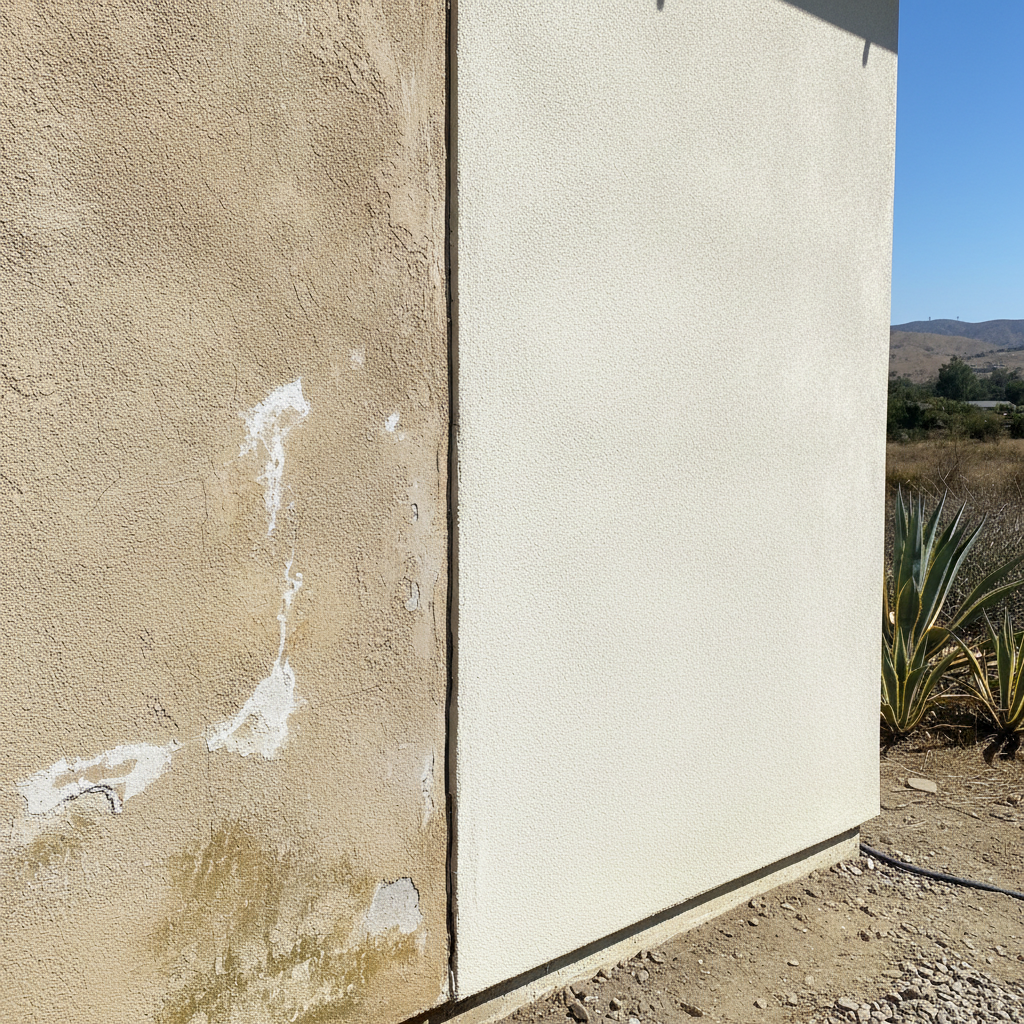
So, you're looking at EIFS (Exterior Insulation and Finish System) for your place here in Ontario, CA. It's a smart choice for insulation and a clean finish. But when it comes to installation, there are two main ways to go about it: barrier EIFS and drainage EIFS. I get a lot of questions about this, so let's clear up what each one means for your home.
What's Barrier EIFS?
Barrier EIFS, sometimes called traditional EIFS, is exactly what it sounds like. It's designed to be a complete barrier against water. You've got your insulation board, then a reinforced base coat, and finally the finish coat. The idea is that the system itself, when installed perfectly, stops all water from getting in. It relies heavily on the integrity of every single layer and, especially, the sealants around openings like windows and doors.
What's Drainage EIFS?
Now, drainage EIFS, also known as water-managed EIFS, takes a different approach. It still insulates and looks great, but it adds an extra layer of protection. Behind the insulation board, there's a drainage plane – essentially a space or a material that allows any water that *does* manage to get past the outer layers to drain harmlessly away. Think of it like a rainscreen. It's a 'belt and suspenders' kind of system, acknowledging that no exterior system is truly 100% perfect at stopping water forever.
Cost: Upfront vs. Long-Term
When it comes to the initial cost, barrier EIFS is generally less expensive to install. It has fewer components and the installation process is a bit simpler. Drainage EIFS requires that extra drainage plane and often more meticulous detailing around penetrations, which adds to the material and labor costs. You're usually looking at a 10-20% higher upfront cost for a drainage system.
However, you've got to think long-term. If a barrier system fails – even a small crack or a sealant failure – water can get trapped behind it. That trapped water can lead to serious issues like rot, mold, and structural damage, which are incredibly expensive to fix. With drainage EIFS, if a little water gets in, it has a way out. This significantly reduces the risk of major water damage and the associated repair costs down the line.
Durability and Maintenance
Both systems are durable in terms of resisting impact and providing excellent insulation. The finish coats are tough. The real difference in durability comes down to water management. A barrier system's durability against water depends entirely on its perfect, continuous seal. If that seal is compromised, its durability against water damage drops to zero.
Maintenance is key for both. You'll want to regularly inspect your EIFS for any cracks, especially around windows, doors, and where different materials meet. Sealants need to be maintained. For barrier EIFS, this inspection and maintenance is absolutely critical. Any oversight can have big consequences. For drainage EIFS, while still important, a small crack isn't an immediate catastrophe because the system has that built-in redundancy.
Appearance
From an aesthetic standpoint, you won't see a difference. Both barrier and drainage EIFS offer the same wide range of colors, textures, and architectural flexibility. You can achieve smooth, stucco-like finishes, or even looks that mimic stone or brick. The choice between the two doesn't impact the curb appeal of your home at all.
My Recommendation for Ontario, CA
Given our climate here, especially with those occasional heavy rainfalls and the general need for systems that can handle a bit of moisture, I almost always recommend **drainage EIFS** for homeowners in Ontario. Why?
- Water is relentless: No matter how good the installation, water will always find a way. A drainage system gives it a way out.
- Peace of mind: Knowing you have that extra layer of protection against water intrusion is invaluable. It significantly reduces the risk of costly hidden damage.
- Local conditions: While we don't get constant rain, when we do, it can be intense. Plus, we've got homes ranging from older builds in areas like the historic Euclid Avenue district to newer developments, all of which need robust exterior protection.
While the upfront cost is a bit higher, the long-term protection and reduced risk of major water damage make drainage EIFS the smarter investment for your home. It's about building in resilience. At Ontario Stucco & Plastering, we've seen firsthand what happens when water gets trapped, and trust me, it's not pretty. Spending a little more now can save you a whole lot of headaches and money down the road.