Homeowners in Ontario, CA rarely look closely at their exterior walls until a piece falls off or water leaks inside. The dry heat, Santa Ana winds, and occasional heavy winter downpours in Ontario, CA put stucco finishes through severe stress. Ontario Stucco & Plastering will walk you through how to inspect your stucco yourself so you can catch small issues before they turn into major repairs.
Stucco is very tough, but the material breathes and moves. When temperatures swing wildly from a hot Inland Empire afternoon to a chilly night, the material expands and contracts. That movement causes stress on the wall.
Before the Inspection: What to Prep
Homeowners do not need expensive gear to check exterior walls. You can grab a few basic items from your garage before you start:
- A standard 3-foot or 6-foot level or a straightedge.
- A trusty garden hose with a spray nozzle.
- A clean notebook and your phone to snap photos of anything weird.
- A stepladder for checking higher spots near the roofline.
Clear away any heavy patio furniture, potted plants, or stacked firewood blocking your exterior walls in Ontario. If the base of the wall where it meets the concrete slab or soil is blocked, our team cannot check for the most common moisture trouble spots.
During the Walkthrough: What You Can Do Yourself
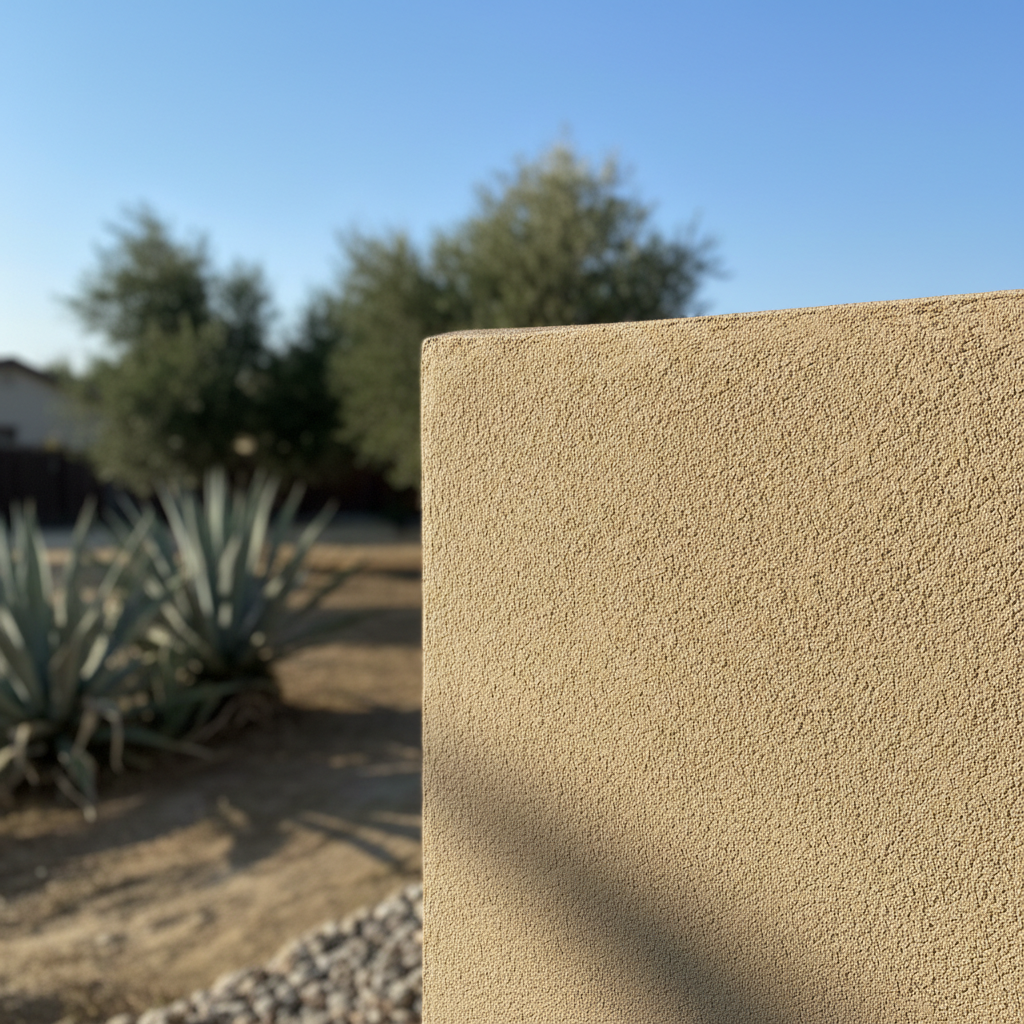
Start at your front entry and walk the entire perimeter slowly. Look at the texture of your Stucco. Hairline cracks less than the width of a credit card are usually just normal shrinkage, and homeowners can monitor them. Anything wider, though, needs attention.
Check the areas right beneath your roofline and around window frames. These are classic trouble zones for Stucco in Ontario. If you see brown water stains running down the face of the plaster, that tells you water is getting behind the flashing. Take your hand and tap gently on hollow-sounding spots. If it sounds like a hollow drum, the Stucco has delaminated from the lath behind it.
Homeowners can easily map out Stucco cracks, check for discoloration, and test the grade around your foundation. But if you find soft, crumbling Stucco, extensive cracking over large wall sections, or signs of mold and rot, step back. That means moisture has breached the weather barrier.
After the Inspection: Your Next Moves
Once you have finished your loop, look at your notes. If you found minor hairline cracks, you can clean them out and seal them with an elastomeric masonry patch on a dry weekend. It is a straightforward DIY job that keeps moisture out.
For anything structural, deep, or spreading, do not try a quick DIY patch job. Slapping hardware store caulk over a major Stucco crack just traps water inside the wall cavity, making the rot worse. Call Ontario Stucco & Plastering instead. Our team will come out, take a proper look beneath the surface, and give you an honest assessment of what it takes to get your home watertight again. Ontario Stucco & Plastering provides Stucco services for homes and businesses in Ontario.